Showing posts with label metaphors. Show all posts

Friday, May 14, 2021

The Taxonomy of a Cloud poem 004-2021

in the domain of sky and sea

by the king and queendom of our heavenly dome

having fled the phylum of finished fate

in a class all its own

order in the court of courtly love

beyond family and faith

foundering in the genus of frolic and fear

saved by every species of cumulus

fulsome floating wispy 

sugary cottony sayonaras

saturated in the sea of sun

swept away


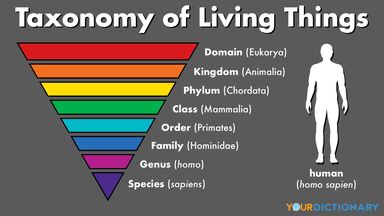
taxonomy of living things human

Wednesday, March 03, 2021

soft touch

Each box of pens sported a dime-sized label declaring SOFT TOUCH. Anyone seeking the ying-yang symmetry of a HARD TOUCH label would be disappointed. Besides, who wants a hard-touch writing instrument? Presumably someone who desires a forced halting, an imposed reflection, speed bumps or humps or whatever they call them in your neck of the woods. A writer who wishes to be arrested goes for the hard touch. It need not be rough or clumsy. Think of it like a vehicle's electronic stability control (ESC) system that employs computer-controlled braking to foster safe driving. They used to call this a governor. Sometimes a writer craves that meditative slowdown. 

For post-post-modernists who shun handheld writing instruments, a keyboard's settings can accomplish much the same thing. Or pour mucilaginous maple syrup over the keys, but don't expect to use that keyboard the next morning, or ever, without a side of waffles.

A soft touch. That's when you want to glide, sail away, slide down the snow-covered hill with abandon. Let it ride. Don't stop for no one or nothing. No edits, rewrites, fixes, catches, second thoughts. Smooth as silk. Enjoy it while you can. Merrily, merrily, merrily, life is but a stream.

They say: She's a soft touch, an easy mark. He's a soft touch, a softee, a marshmallow. Dupes. Targets. Victims. Gullible and gulpable jellyfish.

And yet: Soft touch mother to newborn, father to failing father, skin to skin, kin to kin. Romancing the stone, like water like time. Soft touch melting madness. Soft touch secret texture, facile tactile, silent language. Touch tone static-free, soft spark whisper flame.

May I borrow that pen?

Wednesday, February 10, 2021

whose harm is it, anyway

What is harm anyway? There's the obvious nightmare catalog of war, insurrection, repression, torture, and unimaginable, and all-too-observable, endless permutations of physical, mental, social, etc violence, passive or active. And everything in between along a continuum of horror. There's that. There are also ever more subtle acts or omissions of harm, a seemingly infinite inventory of our inhumanity.

But what about the debates that people wage, even on Planet Harm?

Debates about blame, responsibility, history, cause and effect, will, evil, social structures, philosophies, religions, anarchies?

What about cloudy or murky (in the eyes of some) instances of alleged harm? (Mere mention of the word "alleged" sparks debate in some circles.)

The gesture of holding the door open for someone: is it gallant, condescending, ahistorical, sexist, ageist, arrogant, presumptuous, kind, or neutral?

And the rebuff of such a gesture: is that a shade of harm in the form of hues yet named?

The list goes on. The lists go on. (Whose lists?)

The look from one to another, anonymous or intimate: affection, objectification, lust, compassion, anguish, remorse, regret, rage, curiosity, sadness, charity, solidarity, sincerity, lovingkindness . . . ad infinitum.

The same with the written word, the spoken word. The same (multiplied exponentially) with words or parts of words or emojis transmitted by short message service, or SMS, which we all call "text."

The same with the word or words not said.

And then there's the harm of history, the stain and weight of ancient or recent sins, horrors we inherit, a heritage that can't be disappeared, that we cannot escape, even if by association and lineage. 

So, we on Planet Harm live and breathe all this; it's our atmosphere. Some of us plead acceptance; others pray for amnesia; yet others cry for conversion, a magical metanoia; many crave escape (and they find it but only in passing, momentarily).

We Harmlings are standing on a plank over a crevice. We dream of wings. 

We Harmlings push a rope that is slack from use.

The elders sang sagas of a deus ex machina, a dea ex machina, come to the rescue.

We lost the words but remember the melody.

What now?
Sunday, February 07, 2021

Planet Harm

You walk in the sands, the landscape you know by heart, the windswept dunes granular as sugar and almost as white. The screeching seagulls declare, "Water is somewhere, but where?" People say, "The sky's the limit." What kind of limit is that? The sands, the horizon, they're the limit. One echoes the other. You have no GPS, no bearings. One direction is the same as any other.

Legend has it we are on the planet Harm, meaning that is what we are taught from the earliest age. We are told that our world is round, not flat. We are taught that Harm is spherical but not circular. We are taught that Harm is the name of our planet.

Who came up with that, and when?

Who can say?

As a citizen, a resident, of planet Harm, your pain is nothing special, nor is your grief. All of us are in harm's way. It's our birthright. If everyone is in harm's way, who has a right to complain? Sure, differences of degree and scale exist. But they don't stand out. Harm is in the air, in our history, in our vocabulary, our line of sight. 

When someone (Anonymous, for our purposes and safety) entertained the idea of escaping the circle of pain, it made no sense. What circle? We see no markings, no signposts. How could there be a circle of harm when harm is all we know? How can we imagine an atmosphere other than our own?

No passports, no tickets, no travel vouchers.  

But no one has ever expressed a desire to leave. Nobody has ever voiced a need to flee. And to where would we go? What would we find there?

We perform our daily chores: melting the sand into glass, sculpting the glass into art, selling the art to the Harmageddonite who bids the highest.

The sharp bristly-minty tang of a dark pine forest. The shock of the chlorine choir of the salty sea, its ripples blinding you. The roar of a river halting you. A blanket of emerald meadow lulling you to sleep.

We hear rumors, murmurs. We dream, or fantasize. Our poets sang sagas.

Talk of escape, revolution, refuge. The elders memorized the chants and passed them on to our children's children.

We hear the secret and dangerous whispers about "charms." The unwritten subversive scriptures etched into our blood.

Charms: the coded hints of talismans, trinkets, fetishes, amulets, totems, periapts, tokens, incantations, chants, litanies, phylacteries, scapulas, beads.

The inscription on the desert rock quotes Empedocles: “God is a circle whose center is everywhere, and its circumference nowhere. ”

The priestesses debate whether this promises hope or despair.

Wednesday, December 16, 2020

releaf

On a rare sunny day (any sunny day in the slate palette of winter here is rare), I bathed in the light and walked more than usual. It was sweater and jacket weather. You'd wonder why everyone was not out walking, with or without their dog or dogs, their kids, their spouse, roommate, friend. I prefer solo. True, more than the usual number of walkers paraded about in the almost-festive atmosphere. A reprieve from winter; not spring break but a respite. 

I like to vary my route, never taking the same exact way twice. That's easy in that it might only require me to switch sides of the street or switch the sequence. 

After a momentary mental debate, I decided to stroll down Whittier, home for nearly twenty years: marriage, birth, deaths, dogs, Russian dwarf hamsters, a parakeet, a redbud, raked leaves, shoveled sidewalks. The whole production. Why not. And I was brave enough to stay on the odd-numbered side of the street, the residential one, the one where the mail was delivered, for three years even after I was gone. 

It wasn't too hard. Keep walking. Don't stare. Don't break stride, cane with eagle handle in service.

Near the bottom of the hill, just before Lowell (authors' names about as street monikers in the neighborhood), I spotted two leaves, one greenish-yellow and the other orange-ish and yellow, wedded together, you might say welded. How striking: bright, diaphanous, frail, brilliant. so brilliant I assumed the leaves must have just fallen. They hadn't had time time to dry, brown, and curl.

I stopped to pick them up and held the twinned maple leaves all the way home, my companions.

Once home, I placed them on the counter, the faux-granite peninsula between the living room and the kitchen, a place to venerate these finds. I snapped some photos with my phone when the afternoon light streaming in was strongest. The blare of sun highlighted the vains each leaf exposed to the world.

The next day, on the weekly Zoom with my three adult children (that phrase has long struck me as an amusing oxymoron), I enthused about my natural treasures.

"Here. Look. I'll show you. Can you see them? Aren't they amazing?"

Pause.

"Oh wow."

"Um, Dad . . . "

"What?"

"Take a look. Isn't that plastic?"

"What. Where?"

"Over by the stem."

"Hold on. Let me take a look."

More than taking a look, I concentrated on feeling the twinned beauties.

Definitely fake.

"Holy mackerel!"

Laughs all around.

With a dose of sheepish embarrassment.

And revelation.

Along with wonder of a different magnitude and order. 


Thursday, December 10, 2020

My Interrogative Mode (25)

It is said "freedom isn't free," and yet, assuming freedom means liberation from enslavement; means release from shackles of habit, addiction, custom, attachment, pain, joy, possessions, prejudices, or ecstasy; then what metaphorical pawn for a knight, bishop for a rook, rook for a queen would you trade to be free? 


Tuesday, August 25, 2020

fire tornado

They called it a fire tornado. Or was it tornado fire? Either way, it adds up to hellish fire hellishly swirling and fulminating. Whatever you call it, it's an indescribable inferno windsweeping into new words and definitions, invading lightning-quick into endtimes. Out of nowhere. Just like that: gone. Blink of an eye. Burnt to an unholy crisp. Still smoldering. As the heavens and earth scream out pleading for rain, give us rain, or anything resembling rain or performing like rain, drown this misery, quench the unquenchable. Its deafening roar. Its machinelike hunger and thirst. Its searing vocabulary with new flaming syllables. Rain, begging for rain. Or whatever (human, divine, natural, mechano-chemical) intervention can intercede with torrents of mercy. Whatever it takes to simmer down, to de-parch, to oceanize this fiery avalanche.


Thursday, August 13, 2020

swiped left

Left? I meant right. Dyslexia is ruining my life. Spatial dyslexia. Is there a word for that? Dyslocusia? Dyslocalia? Left, right, up, down, who can keep track these days, such polarities, mere labels. I swiped left. I wanted to swipe right. Her Joan Baez eyes, Salma Hayek hair, Ingrid Bergman mystery, Grace Slick smile. It was all there. Plus her Ph.D., dog breeding, charities, operatic compositions, Harley Davidsons, weightlifting championships, MacArthur genius grant, David Hockney collection. The whole shebang. Down the eternal drain of dead-end, missed opportunities, late train, passing glances. The whole bit: the subway car going the other way. Frozen in time. Eyes locked. Cinematic longing. Sayonara. Arrivederci. There's a Craigslist category for these lost souls. No, no, I'm done with remorse, self-pity, self-aggrandizement, regret. To be fair, life gives us lots of do-overs, reboots, mulligans. Recalculating. Redial. Draft version. Revision. Track Changes. Recovery file. Is there some programming trick in the dating app? Oh, the oops of oh-no. Swipechosis. Swipal envy. The evaporation of what-if even before the ink was dry.

FOMOed.

Next.

Tuesday, April 14, 2020

Broken Windows and Silver Doorknobs


Bad neighborhood. Sketchy. Rough area. Borderline. Ghetto. Have you heard any of these descriptions, however offensive they may strike you? Have you heard either more negative terms or their euphemistic replacements?

Come, take a walk with me.

No. Right now. Don't be afraid.

Observe this block. Schuyler Street. Take in the parade of two-story, two-family houses, built in the 1920s and '30s. Lawns manicured, adorned with daffodils, mulch, shrubs, trees. No litter. Structures not thirsting for paint or carpentry. Across the street, much the same: different architectural styles, smaller, more modest. Up the block, historic Myrtle Hill Cemetery. Graves dating to the 1800s, including that of a Civil War Congressional Medal of Honor recipient. Several blocks distant, over on Milton Avenue, a house overrun by fallen maple limbs and uncut grass, by weeds, a house choked by its longtime neglect, its metal fence interweaved by sprawling hedge branches, an empty pack of Newport 100s, a discarded Brisk ice tea, a crumpled invoice for car repair, a lone latex glove. An official notice of condemnation posted on a window and door. Blue recycle bins, tires, broken trikes, and split-open trash bags on Herkimer and Emerson. And up the hill, on Pharis Street, overlooking city and suburbs, a pristine lawn with a sign warning against having your dog use the lawn as a private bathroom, in front of a pristine Arts and Crafts bungalow freshly painted yellow, brown, and black, with a shock of red on the door.

Care and neglect coexisting. Pride and privation. Gain and loss. A fabric of multicolored threads and textures, sewn and patched, stitched and shored up. Some more than others, some less, some not at all.

Let's walk some more, keep pace, stretch your stride, down the hill, toward the creek. Oh, you'd rather not, this is a "bad neighborhood"? Be brave. Suck it up. Trust me. Really.

True, that broken, rusted pickup in the driveway looks unsavory, so does the mosaic of tossed Burger King wrappers and soda cups. An eyesore. It makes my eyes sore.

But look across the street, that Victorian painted lady, emerald and cream with surprises of vermilion. Do you see its new siding, every storm window sparkling new, the shiny metal roof? The rebuilt porch? That house could pass for brand-new if you didn't know better.

I am sure this is obvious, but I can't help noting it: we are not dodging bullets, street-corner hustlers do not catch our eye, wondering if we covet their gaze and proffered wares.

Form your own conclusions, as you will. 

In my Age of Coronavirus walks, the gods and goddesses of surprise have been my tour guides.

Surprise, surprise.

If we look for broken windows, they appear. If we search for silver doorknobs, we find them.

p.s. Ever hear the expression "my mind is a bad neighborhood"? (It's popular in wellness and recovery circles and can possibly be traced to an Anne Lamott quotation, but its provenance is uncertain.) As with the physical neighborhoods described above, be careful what you look for. As Leonard Cohen suggested, "look among the garbage and the flowers." You never know what you will find.


Wednesday, March 25, 2020

The Orchid Teacher


No, no, no, not someone to teach the arts of nurturing orchids. No, no. The orchid is the teacher. She gives the lessons. He tells the tale. It sends the message. The orchid. It's the seer, guru, professor, maestro.

The orchid's the teacher.

The blossoms wilted. They died. They fell. The big green leaves stayed around all winter after the flower spikes were cut down near the bottom. Watered once a week in the time of hibernation, a time before The Quarantines. Faithfully. Months passed. And in the spring two, possibly three or four, minuscule shoots, bright dots, green-yellow eyes peering from the sphagnum. It is said these are flower spikes. Nascent. 

Hope. After the endless winter.

Hope was not abandoned, all ye who entered here.

Hope in the Age of Coronavirus.

I am the orchid.

You are the orchid.

No human heart or voice ever scolded the orchid, never inserted a sideways "should" in any shape, color, or form. Never remonstrated the orchid for its tardiness, its barrenness, its playing dead. No human name murmured "what if" or "if only you had" or "but." The orchid wouldn't listen anyway. She knew her secrets, he guarded his destiny, it surrendered to its fate. The orchid endured not a single "told you so" or "could have" or "would have."

Her patience with our impatience was our homework, quiz, and test. Everyone passed. His lesson was for all to see all along. Speaking not a word, the orchid spoke volumes.

You are the orchid.

I am the orchid.

We sing hymns to the orchid teacher. The orchid is the teacher, we the pupils.

The orchid is the message and the messenger.
 

Friday, January 03, 2020

who holds the keys


Chain-link fence outside the power plant. Padlocked. A padlock one could buy at the hardware store. Cabinet for the electrical service into the building, protected by bollards. Padlocked. Switchbox out on Route 41, middle of nowhere. Same. Electrical panel in the subway. Padlocked. Gate at the stadium entrance. Iron railing around the government offices. Same. Same. The briefcase with the codes. The restaurant closed for nonpayment of taxes. Padlocked. Padlocked. Her jewelry box, his gun cabinet, their storage locker. Same. Same. Same. Her secret, his secret, their secret. Who has the key. Keys. The missile silo. The hidden tabernacle. Silent shelter. Cave. Padlocked. Shackled. Handcuffed. Locked. The safe deposit. The vault. Who the keys, who the will. Where the keys. How. When.

Tuesday, November 19, 2019

life as a #RubeGoldberg


You do not have to be a certain age to know what a Rube Goldberg is, or to understand those two words as an eponymous adjective. But it helps. Rube Goldberg was an artist and a cartoonist who comically depicted circuitous (sometimes literally), not-quite-labyrinthine, intricate ways to accomplish a ridiculously simple thing or to get from A to B. He was a Pulitzer Prize winner. I have a memory of his illustrations, but can't put my finger on how, maybe the comics in a Sunday newspaper. I distinctly remember my father often saying, "What a Rube Goldberg," just as he would refer to our junk closet as "Collyer brothers," or "It's like Collyers' in here," though I did not know anything of their real-life story.

Speaking of real life, the other day I slipped on ice as I went to unlock and enter my car. I dropped a book by Francine Prose (perfect name for a writer, eh? Try her!), which landed at my feet. The book was not damaged; it did not splay open and get wet from the ice. Within the book, right after cover 1, as we call it in publishing, I had tucked in a $320 check to be deposited, from a free-lance job. I purposely put it in the book so it would not get wet or damaged from the light snow. I picked up the book, inspected it for damage, and opened it. No check. Where was it? I was positive I had placed it within the book for safekeeping. I was 100% positive. The most irritating thing about such life riddles is the thought I am losing my mind or my memory, either of which is possible at my advanced age. Still, it frustrates me and pisses me off. It can be a totally unimportant object, a cheap pen or a useless note I wrote to myself or a dime. It's bothersome. I had that in the back of my mind. Did I not put the check in the book? I did. Stop right there. Where did it go? I looked in front of me, to my right, my left, and in back of me. Did the wind sweep it up and away and down the block right before my eyes? Had I signed it? Oh boy. I looked and relooked. My theory has always been: look everywhere you have looked and then do it again but slowly. No luck. Down on my knees in the cold wet. Look under the car, at the undercarriage, beyond the perimeter of the chassis, around the tires. The tires! What is that leaning against the inside of the right-front tire? Could it be? Indeed. Yoikes. I scurry to the other side of the vehicle and gently extricate the fragilely leaning check, as gently as an artisan restoring a DaVinci fresco. 

What a Rube Goldberg. Not exactly. Much simpler than the known pattern of a Rube Goldberg. It was conceivable, though, that the lofted check could have gone from its cozy berth near the tire and somehow up and under the hood and somehow wedged between the radiator and the grill. Never to be found. 

Yes, I exaggerate. But things happen.

What about on a personal level? You know the bit. "She said to me, and then he said, but after that I told them, and before you know it they posted on Facebook, and I repeated, then she and he posted, and then they said, then they were not talking to me for the rest of my life."

That sort of thing.

A freaking Rube Goldberg of human proportions.


Wednesday, October 30, 2019

fiery words


With large loft windows facing west, the afternoon-into-evening sun, wintry rare in these climes, blares. All but shouts. A clarion charge of lambent light, never failing to lift the indoor temps a degree or two. Healthy for the orchid, bonsai ficus, and cacti on the kitchen-dining room peninsular counter, beside the Compact Edition of the Oxford English Dictionary, volume 1 of 2, open to the C's, the handy reader's magnifying glass resting on the cleavage of open pages. Sprawled on the couch, I am reading The New Yorker, on the cusp of a nap, hindered by the lambent intrusion; too drowsy to get up and pull the blinds down. Eyelids fluttering, flickering: the first frames of a silent movie. Sparrows, crows across the street, distantly bickering. Alone in the hull of a huge ship, flooding, like the Titanic but battleship steel, and yet the aristocratic balustrades and chandeliers of opulence. That dream again. No one but me. The Atlantic cascading down the stairs. My shouts, my cries. To whom? To what? My chattering teeth. The molten ice enveloping my veins. Please. Can you hear me? Can someone hear me? I can't swim. Too late. Sinking. No one. What is that? What. Where. What. Wisp of warmth. Dust. Rescue? Smoke? Attempt to scroll eyelids up. Turn head left, right. Scroll up. Eyes cloudy. Force open, wide-eyed. Wisps of white floating from the open OED. Vatican puffs of papal decision. Jolt. I jump. Dart to the counter. First tongues of flame. Memories of tissue paper, August heat, Sherlock Holmes magnifying glass in the backyard. Presto, no matches. Boyish danger. The word, you ask. Which word? Chagrin. The noun. Then the verb. Chagrin.  

Wednesday, September 25, 2019

the static


like, you know; turn the dials on the Hallicrafters short-wave radio like safecrackers; dive bombers; know what I'm sayin; shrill metallic blast; gurgling high-pitched twirling; ya know; crackling hum; intergalactic buzzsaw; in my opinion; galvanic thrumming; Radio Moscow; I know, right; shockwave echoing; lol; electronic pulsating stammering; shrill feedback; ear-splitting waterfallish avalanche; Vatican Radio; yeah, no; tin stuttering; galloping burping; infinite clanging; Radio Nederland Hilversum; LOL; yeah, no, I know, right; BBC World Service; wave-rippling cool giggling trickle; broken-muffler mauling; know what I mean; sandy sandpaperish sifting; harsh endless high-volume whispering; like; right  

Tuesday, April 30, 2019

walking with coffee


The deep, wide-brimmed ceramic cup wobbled. Not true. It didn't wobble, not that you could see. The coffee in it swayed. Medium roast. Half 'n' half. Swayed not even up to the alabaster brim, east or west, north or south. The birth of a wave. A false tsunami. No spillage.

He gets to the table, dry, slight swirl subsiding.  

"They say it's easier if you don't look at it."

"I've heard that."

"It's true."

"I don't doubt it."

He looks across the table, studiously avoiding a glance at the cup as he lifts it toward his lips. He recoils from the hot coffee, flinches, spills a dollop onto the table.

"See? I didn't look but look what happened."

"I see."

"So unlooking only steadies you if you're walking?"

"Something like that. Maybe. I don't know."

"Some kind of crazy metaphor?"

"Who knows, right? For what, I couldn't say."

He reached for the cup again, looked straight at it, lifted it, coffee waltzing, and leaned forward, trying to meet the cup halfway. His lips found the brim; he sipped.

"Ah. Success."

"I see that. Congratulations."

"Thanks. This time." 

Monday, March 18, 2019

problems without passports


Space rocks of this size [460 feet or larger] are so-called 'problems without passports' because they are expected to affect whole regions if they collide with Earth.  18 March 2019 BBC News website

I wish someone had told me my problems needed passports -- at least some of them apparently do. I simply could have refused to apply for my problem passport and left the problem in outer space, or wherever passport-required problems are stored. Granted, even a problem with a properly issued passport can be kept at bay via visa restrictions. Everybody knows that. I don't dare ask how one applies for a problem passport, who issues it, which metaphysical countries require it, and what the expiration date is. Let me be frank: why would anyone want to apply for a problem passport? To what good, or cui bono as we were taught in our high school Latin classes. I suppose in accord with some sort of Freudian-Jungian psychology theory, one should face one's problems, not bury or "stuff" them. And this isn't just the advice touted in the realm of psychology or psychiatry. Many religious and spiritual belief systems teach that awareness leads to enlightenment. If so, can't we merely say, "Okay, I'm aware of Problem X. Got it. Next!" Oh, you say, we have to face and work through our problems? If you say so. But why go out of one's way? Don't we have enough nonpassportable problems without having to sign up for more? And one could safely assume that the passport problems are heftier, more intricate, and more ominous. Who needs that? Who's to say we don't have something big at work here, such as World Peace? If governments stopped issuing passports for problems, such unsettling matters would be confined. Consider how nations agree on travel quarantines to stem the spread of terrible sicknesses like the Ebola virus. Yes, the host country, so to speak, still has to manage the crisis, but it's contained. A moratorium on the issuance of problem passports might conceivably isolate the world's problems so that they can be "domesticated," if not solved or cured. Having said all that, I suggest that we aren't talking about problems on such a grand scale. I submit that problems requiring passports exist on a much more personal level. I can't verify this, but I imagine that passport problems, or more accurately problems with passports, are vexing, tense, dramatic, daunting, and life-changing. Nevertheless, they are phrased and formulated with stark simplicity: Why? Why not? Yes or no? When? Should I? Shouldn't I? Oops! I just realized I unintentionally tipped my hand. I accidentally allowed you a glimpse of my own problems without passports because I mistakenly equated simple and challenging questions with problems. Since when did a question become a problem? Hunh? But back to the beginning of this meandering maze of speculation: who issues these passports for problems? Since when? And just who do they think they are? What do they get out of it? (That's easy: control. That's what all passport issuers seek.) Back when I was in junior high (before they were called middle schools), we used to read "The Man Without a Country," a short story by Edward Everett Hale, published in 1863. (Go ahead, Google it. Or Duckduckgo it.) The protagonist renounces his country and is left to spend his days at sea, countryless, adrift and unwelcome everywhere. You can see where I'm going with this. Would it be so bad to be similarly cast at sea never permitted to enter a country with problems, navigating the world's waters without a passport for problems?

Saturday, March 09, 2019

gesundheit


Achooooooo, my body roared onomatopoetically. I was driving. The notion that you can't keep your eyes open while sneezing haunted me. (I have since learned that some people can do it, keep their eyes open during this natural-reflex blast that can reach 200 mph. I'm not one of them.) I could tell I was in for one of my violent sneezing jags. An allergy thing. Comes out of nowhere, then stops when it wants to, no matter what I do: blow my nose, throw cold water on my face, change direction or position, or locale, pray, grovel, beg. I can sneeze 15 or 20 times like this. maybe more. It's exhausting. Does your heart really stop when you sneeze? Is that why people wish divine blessings upon the afflicted? Or the alternative safe and secular cry of "health!" in German? These days, even that is controversial, for god's or God's or gods' or goddess's or goddesses' sake. As if one became an atheist or agnostic apostate by exclaiming "God bless you!" Gawd. Achooooooo again. The lake on the right, where a year or two ago a woman driving slid or wandered off the roadway and went into the lake and drowned in water only several feet deep. I tried. I did. I tried to open my eyes. And, no, forget about the popular nonsense that your eyeballs can pop out if left open while sneezing. I had never heard of that silliness until I did some fake research for this fake article. Acheeeeeeeeeew! Here we go. Ahhhhhhhchaw! I can't pull over. There's the abutment, the wall, holding up the train tracks, the 10' 9" overpass, tragically hit so many times by inattentive truck or bus drivers. Open eyes come in handy in this stretch. Why these sneezes? Reach in back for the tissue box. Blow nose. Twice. While driving. Throw tissues on the floor. Gross. But I have to drive. Achooooo! When will this stop? Is it humanly possible for me to exert more effort, more concentrated focus and control, to keep my eyes open. I'd settle for keeping one eye open, to drive; the one eye of the drunk trying to drive but here I was stone-cold sober withstanding a sneeze attack, a sodden gale-force ambush. And what about ACHOOOOOOOHHHHHHHHHHA willpower? A try-harder, try-some-more, exert-more-will society expects the will to reign supreme; believes The Will (der Wille), Willpower (die Willenskraft), can prevent or conquer woeful habits, addictions, or like-minded disorders. Really? Try it for a sneeze, cough, or diarrhea. Try willpower for an incontinent bladder, projectile vomiting, or the slip of the tongue you really did not want to vocalize. Try willpower to abstain from the last potato chip in the bag, the first chocolate, the just-one-more binge episode tonight on Netflix. Willpower is overrated. Back to driving, navigating the lake parkway at dusk. Achoooooiiieeeeee! When will this end? Exit the parkway. Onto the boulevard. Ah. Breathing. Ah. Easier. A creeping invasion of calm. Home. Sneezeless.

Wednesday, February 27, 2019

handling industrially


The sign on the white work van in the parking lot said "Industrial Handling" in black letters. Duly noted. I entered the Shopping Temple (i.e., mall) at the Lord & Taylor entrance and strolled through the aisles, passing through invisible clouds of fragrances pour homme, pour femme, pour vous, pour moi, pour anyone. Without being asked for a passport or visa, I passed from the spice-, herb-, mineral-, and floral-infused fragrance domains into a new country, The Land of Emollients. Behold a liquid arsenal of softening secrete agents; salves, balms, potions, lotions, creams. A festival of mollificaring, appeasing, pacifying, soothing. Just the word, emollient, softening its surrounding syllables. A haven of healing for those of us marred by Industrial Handling. Those of us man[gender-neutral]handled, scarred, scratched, or atrophied into scaly, itchy Walking Wounded. We the thick-skinned survivors of industrial-scale emotional, perhaps even physical, handling, more accurately, mishandling. We the escapees out from under the thumb of verbal racks and industrial-strength conveyors of caustic charm. And who among us has not qualified at one time or another as a candidate for  the Legion de Malhonneur? Sure, maybe we naively or hopefully enlisted for our manufactured misery. Some of us stumbled into the 55-gallon drum of acidic animosity or arid indifference, slowly leaking. So be it. We paid the cost of Industrial Handling, didn't we? A cost too dear. But for now we welcome with open arms (and hands, legs, faces, necks, you-name-it) every variety, brand, and concoction of moisturizing healing; every texture, thickness, consistency, and volume of unguent; all and every extreme unction, to anoint our sickness. And theirs, too; the Industrial Handlers. I stopped. I asked two ladies in waiting at the counter in The Land of Emollients for a sample. Your most excellent and edifying elixir, please. They knew right away. No hesitation or forethought. This is it. The taller of the two Emollient Ambassadors (she with chestnut hair and deep brown eyes) placed a small tube, 0.5 oz. / 15 g, in my left hand. I curled my fingers around the tube, made a slight bow, and turned around. I exited the store. The white work van was gone. Frisson accomplished. 

Friday, January 04, 2019

beyond the beyond


Ultima Thule. Far out. Far-er out. Nameless. Ultimate unknown. Beyond the known known. Planetary Snowman. Past the silence. Beyond the pale. Pale moon. The dark side of the moon. Dark to whom. Lunar loss. Tidal wave. Glad tidings. Inner. Borderless. Outer. Vergeless. Limit less. Beyond the beyond. 
 

Sunday, December 02, 2018

The Clementine Chronicles


The morning rite: one seedless succulent clementine on the tabletop, on the wood portion, near the slate. Sit in high-backed chair. Steaming black tea, half and half, no sugar. Heidelberg Cracked Wheat, toasted, three slices. All three with butter. One with Bonne Maman Red Raspberry Preserves, French. Clementine, Algerian. The Clementine Challenge: peel it uninterrupted, unimpeded in one fell swoop, one unbroken peel. Has yet to happen. Its taste less acidic than the typical, larger orange; its size, small; its nine morsels edible. (Nine edible portions? Sometimes, for example, ten. And if nine, here's a mathematical conundrum: when I break the sphere in half, 50 percent, how do I get two equal halves [4.5?] without splitting one morsel in half, squirtiness and all?  The peeling: paper towel underneath in case of juice release. Aren't polishes for wood citrus-y? The first challenge is the start. To puncture, to break through its skin without squirt or puddle. Skinny dipping. Take a fingernail to break the barrier. Pierce it. Then curl, roll, peel, delicately. Okay, so the disrobing is interrupted. Breakage. It won't be one exciting unpeeling with a presto! ending. Nevertheless, when all is said and done, what, six segments of peeled skin which, if fitted together, comprise a fruitful Rorschach gestalt structure. Four or five on an exceptionally good skin-spin cycle. Is one perfect Pauline peel possible? Who can say? Then, a reversal: the inability to puncture, to get things started. Is it because of closely clipped fingernails? A difference in the batch of clementines? Temperature or humidity? Try a small cut with a knife. Bleeding of clementine juice (not blood orange's). Droplets on the tabletop's wood, the paper towel yellowed, urine-colored yet still brightly and refreshingly citric. The worse wound: the whole peeling venture has run amok! Portions cleaved with skin intact. Take the fruitflesh to mouth and peel that way. So unaesthetic. So sloppy, drippy, and skill-less. Such anarchy. What happened? Who knows. But the next morning, after the words up to this point, a refreshed peeling venture. Softly, with pressure, pick at the outer layer of the outer layer. As if performing a patient surficial scraping. Indentation. Breach. And then, ah, the most exquisite peel-curl yet: inches long, liberated from the sphere, fragrancing the morning air. Five peeled-skin segments but really four if the crumb-sized bit is not counted; three if the large-crumb-sized bit is discounted. Mostly one, an elongated scroll, a clementined unfurling in all its clement mercy. Maybe it was the switch to Smuckers. Most likely the recast attention afforded from the previous draft, the one that had ended with "What happened?" And did anyone perchance mention the pruriently pleasing uncleaving of the crescent sections of edible fruit, a secret, quiet, and delicate undertaking requiring the dexterity of a surgeon, a lover's tender patience? 

Words, and Then Some

Too many fled Spillways mouths Oceans swill May flies Swamped Too many words Enough   Said it all Spoke too much Tongue tied Talons claws sy...